Packaging
What does the product need?
Develop carton dimensions, explore case arrangements, specify shipping cases, and assess strength. Keep the input choices and saved results available for the next review.
About PackCalc
Our experience spans packaging, logistics, and supply chain operations. We built PackCalc to connect the calculations, specifications, and decisions that carry a product from its first pack to its final pallet.
Explore the toolsFrom product to pallet
Why we built it
Working across packaging, logistics, and supply chain operations, we kept encountering the same problem: important decisions were spread across spreadsheets, specifications, and email. When a requirement changed, teams had to reconstruct the context before they could move forward.
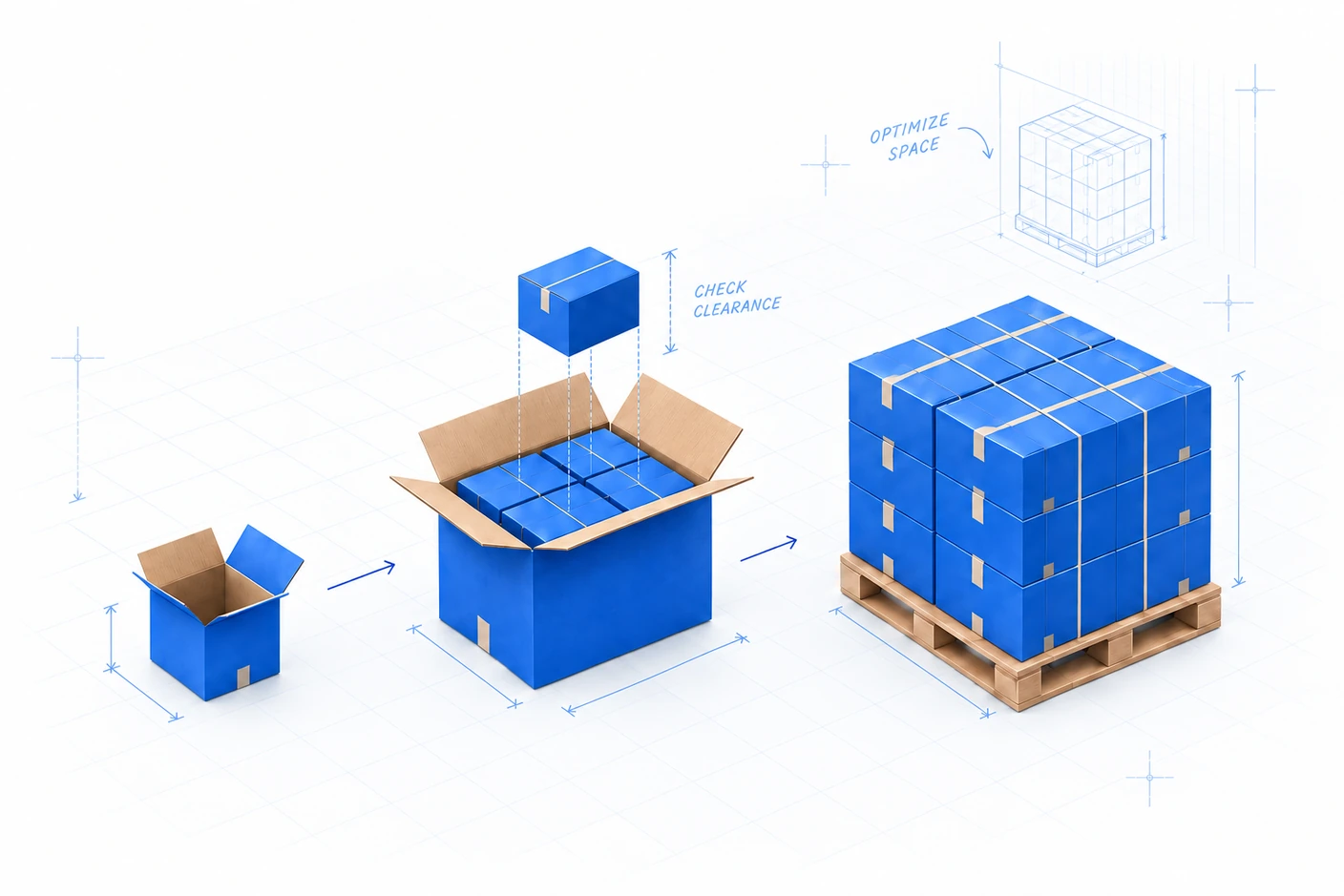
A carton dimension becomes a case arrangement. That arrangement informs a shipping case, which determines the pallet load. Yet the work often lives in separate files, with the reasoning between each step left behind.
PackCalc brings these decisions into one place. Start with a calculation, save a useful result, and connect the next step when you need to. A single tool can answer a single question. A Packaging System can keep a broader piece of work together.
A shared basis for the work
What does the product need?
Develop carton dimensions, explore case arrangements, specify shipping cases, and assess strength. Keep the input choices and saved results available for the next review.
How will the load travel?
Compare pallet arrangements, loading quantities, and space utilization. Review height, weight, and stability assumptions alongside the packaging that creates the load.
What changes across the system?
Understand how cartons, shipping cases, and pallets relate. Use saved work, quantity planning, and reports to discuss requirements with colleagues and make the next decision with context.
How we approach the work
Useful software makes the basis of a decision easier to understand, review, and carry forward.
Review dimensions, units, constraints, and calculation assumptions. Our methods reference explains supported engineering approaches and where their limits matter. Calculated estimates support professional judgment and appropriate physical testing.
Read the methodsKeep components and results organized in Projects. Connect them in a Packaging System to review relationships, revisit requirements, and update the work as decisions change.
We do not sell your data or use your project information to train AI models. Our privacy policy explains calculation processing, saved data, and analytics choices.
Read the privacy policyDesign. Validate. Ship.
Explore the tools, save your work, and build from there.
Have a question? Get in touch
You have used all your free tool runs for this week.
We are giving Pro access to selected enterprise packaging teams in exchange for practical feedback. If this would help your workflow, request access and we will review it quickly.
You reached a free usage limit. We are offering Pro access to enterprise packaging teams who can share practical feedback.
Create a free account to use PackCalc's calculation tools. It only takes a few seconds.